
AI
-
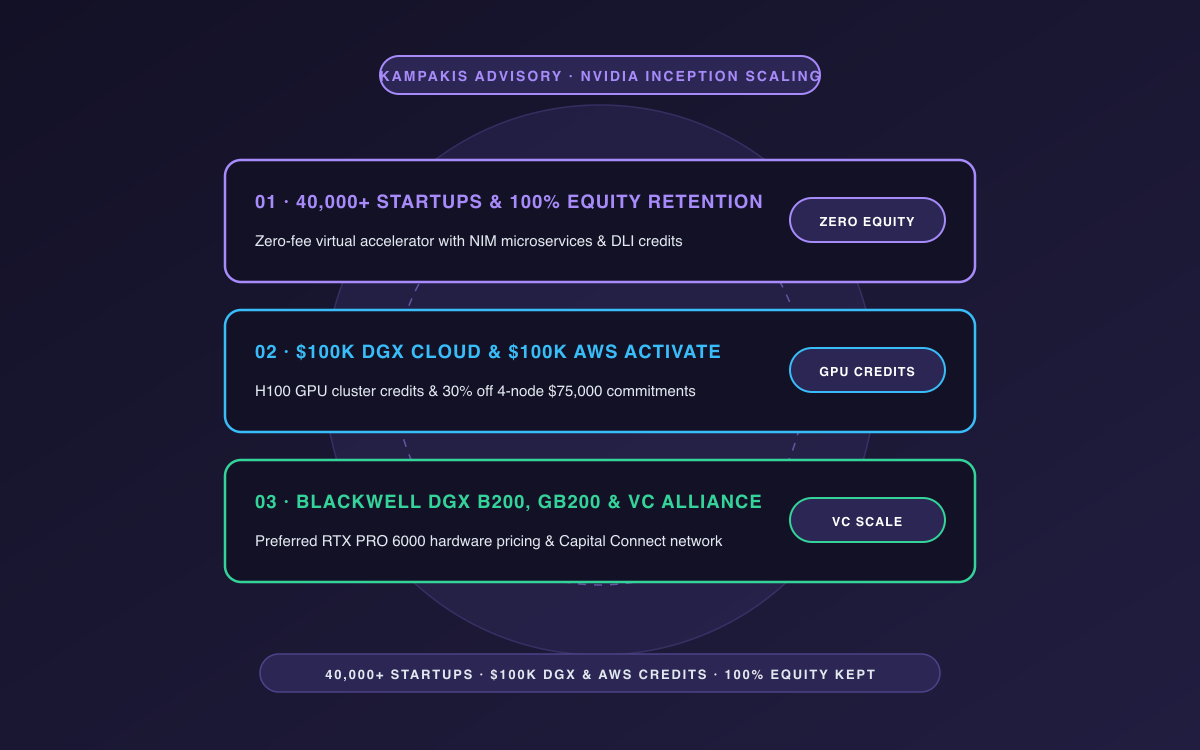
NVIDIA Inception Program Guide: Compute Credits, Venture Access, and Hardware Economics
Executive Overview of the NVIDIA Inception Program The NVIDIA Inception program operates as a non-equity, virtual startup accelerator tailored for companies leveraging artificial intelligence, data science, and high-performance computing. Unlike traditional cohorts such as Y Combinator or Techstars, NVIDIA Inception imposes no fixed timelines, mandatory physical relocation, or demo day structures. As an ecosystem encompassing…
-
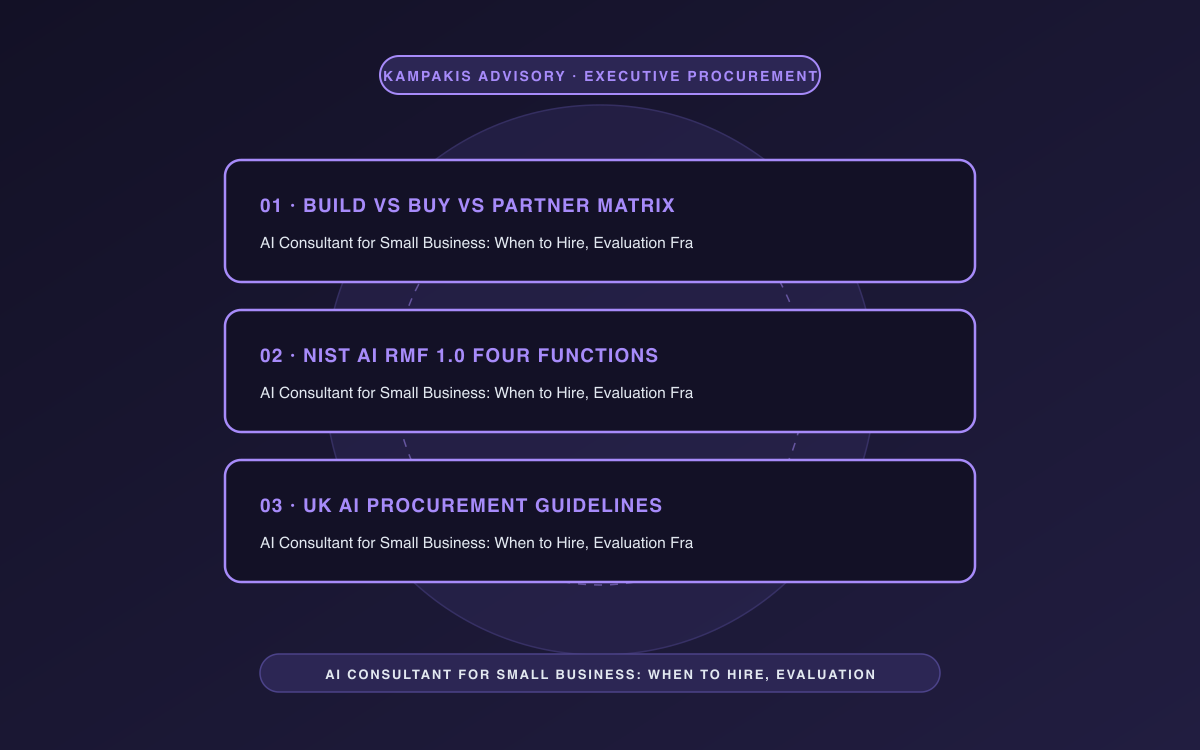
AI Consultant for Small Business: When to Hire, Evaluation Frameworks, and Practical Procurement
Small businesses face increasing pressure to adopt artificial intelligence to automate operations, improve customer engagement, and extract insights from existing data. However, deploying machine learning systems without strategic clarity introduces significant financial and operational risks. Deciding whether to hire an ai consultant for small business initiatives depends on identifying specific operational bottlenecks, evaluating organizational data…
-
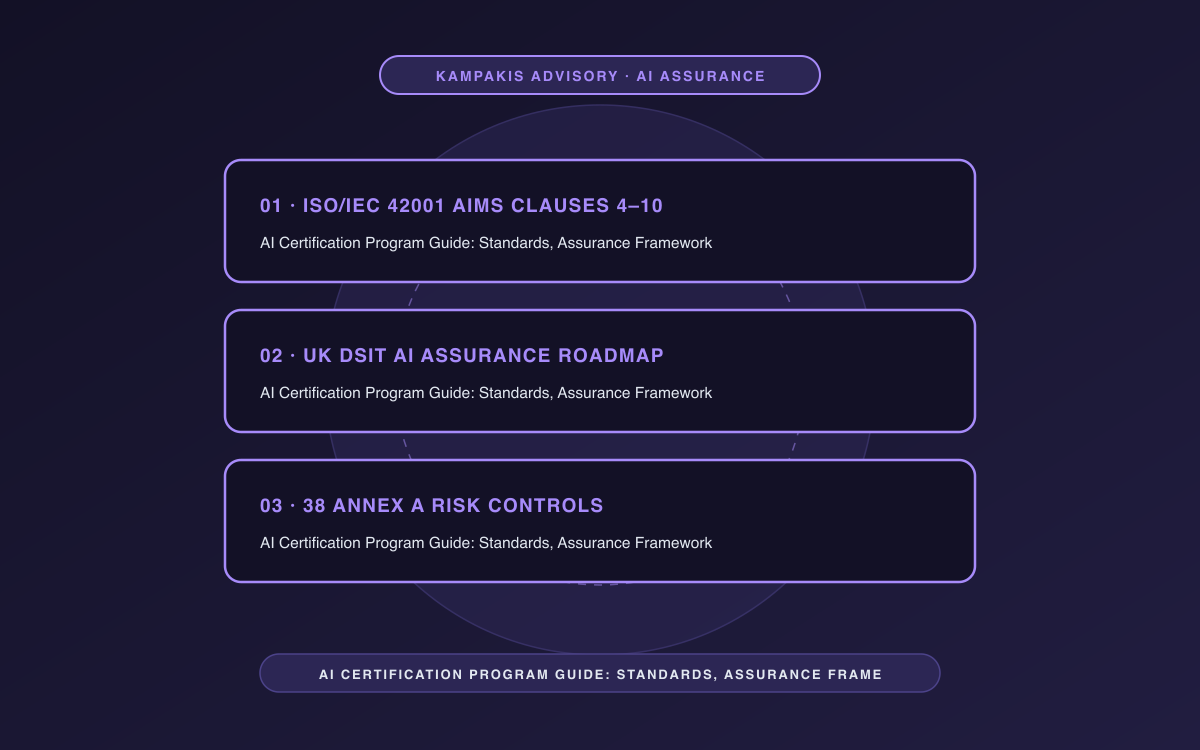
AI Certification Program Guide: Standards, Assurance Frameworks, and Organizational Compliance
An AI certification program is a structured verification mechanism used to validate that an artificial intelligence system, an organization’s governance practices, or a practitioner’s professional competencies satisfy established benchmarks of safety, accountability, and technical reliability. As enterprise adoption expands, certification has shifted from an optional reputational signal into an operational necessity driven by procurement requirements,…
-
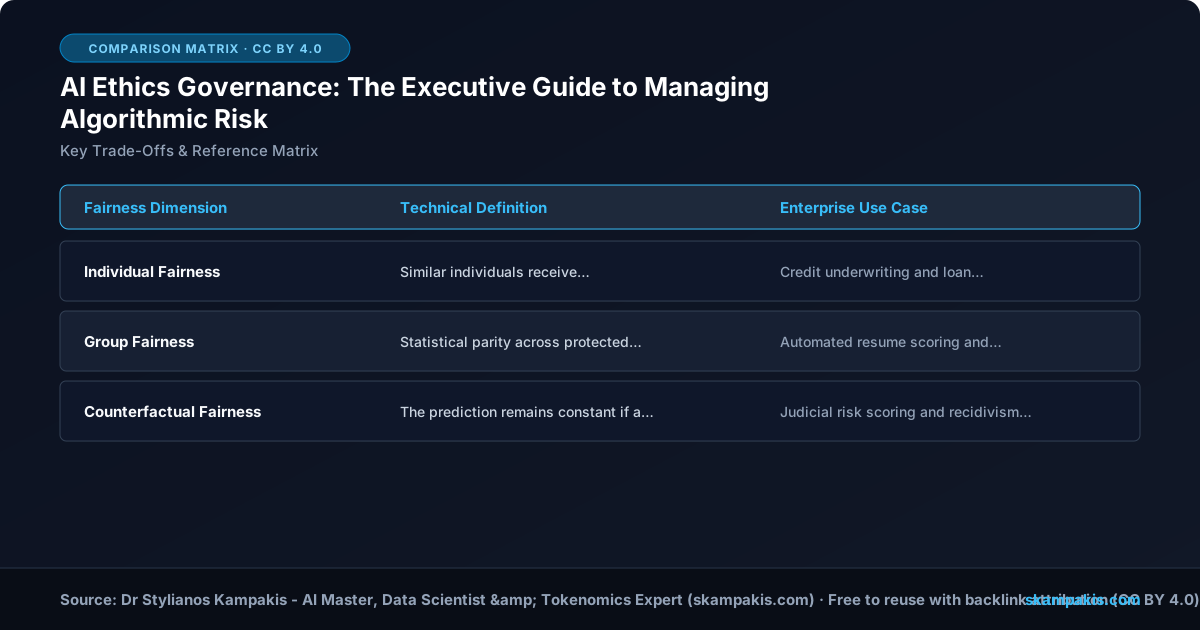
AI Ethics Governance: The Executive Guide to Managing Algorithmic Risk
This executive guide outlines how business leaders can establish rigorous AI ethics governance to mitigate algorithmic bias and ensure regulatory compliance. It breaks down the core principles of algorithmic fairness, explainability frameworks, and a four-phase roadmap for enterprise risk management.
-
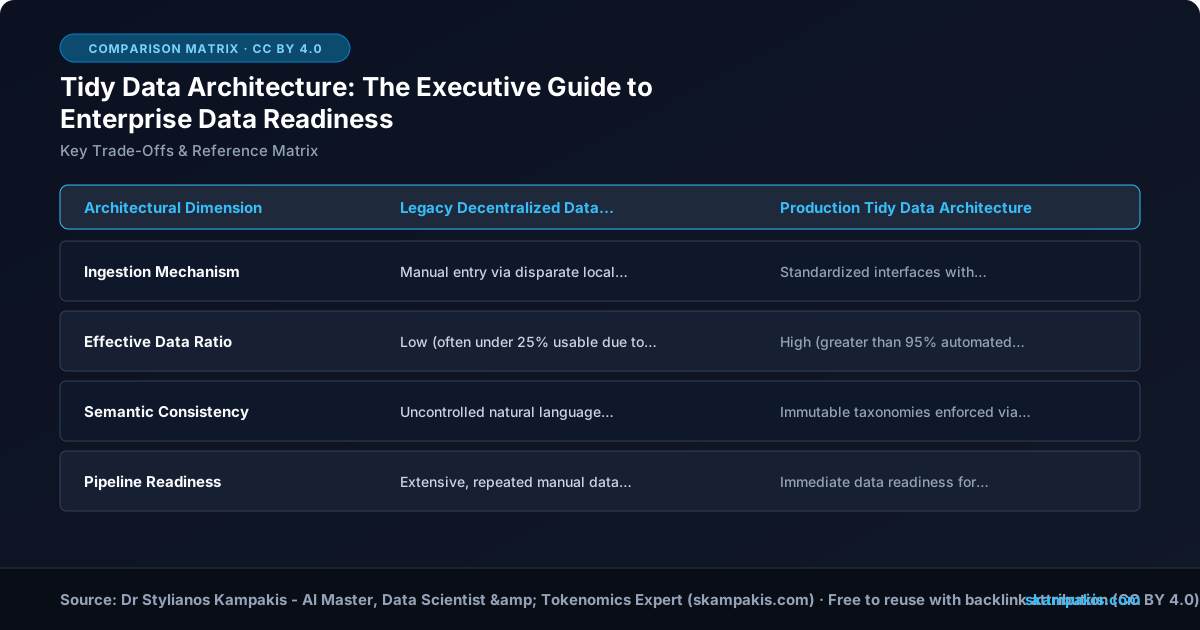
Tidy Data Architecture: The Executive Guide to Enterprise Data Readiness
This executive guide details how implementing a tidy data architecture eliminates silent machine learning failures, standardizes ingestion schemas, and bridges cross-departmental silos. By moving beyond reactive data cleaning, enterprises establish permanent operational data readiness.
-
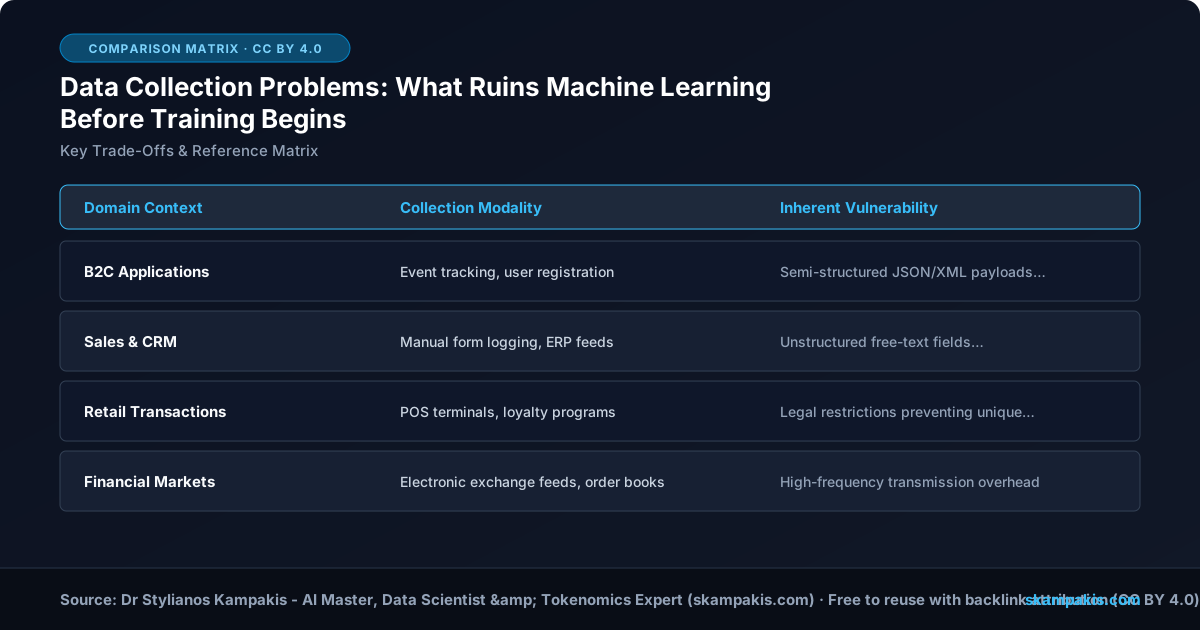
Data Collection Problems: What Ruins Machine Learning Before Training Begins
Data collection problems undermine machine learning models before training begins by introducing dirty data, bias, and missing variables. This architectural guide details how to build resilient pipelines by setting clear objectives, choosing appropriate storage, and aligning data capture with business goals.
-
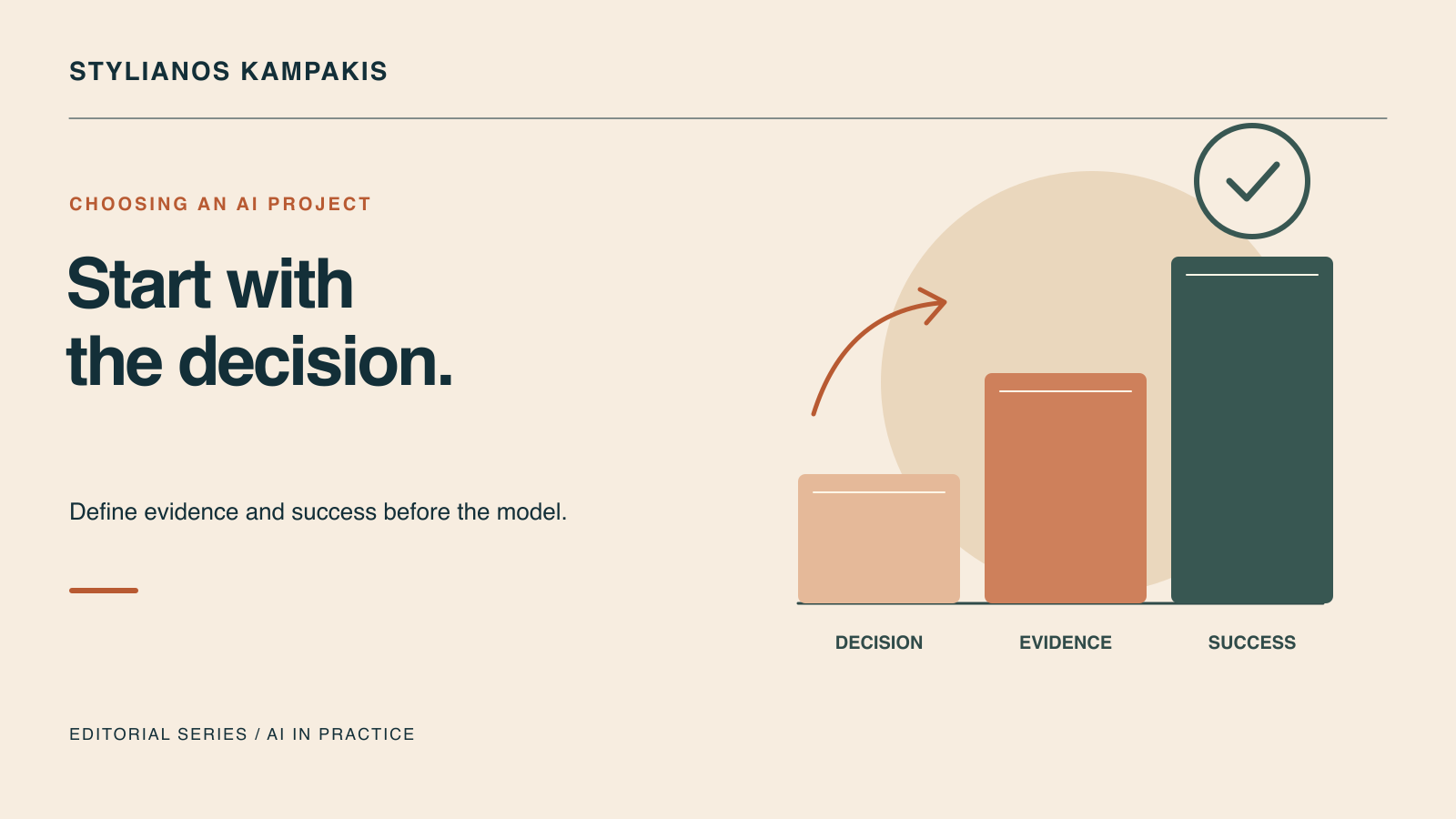
Choosing an AI Project: Define the Decision, Evidence, and Success Criteria Before the Model
Choosing an AI Project: Define the Decision, Evidence, and Success Criteria Before the Model Choosing an AI project requires leadership teams to step away from model architectures, parameters, and algorithms to first examine three foundational questions: what decision must the product make, what evidence exists to support that decision, and what baseline proves that machine…
-
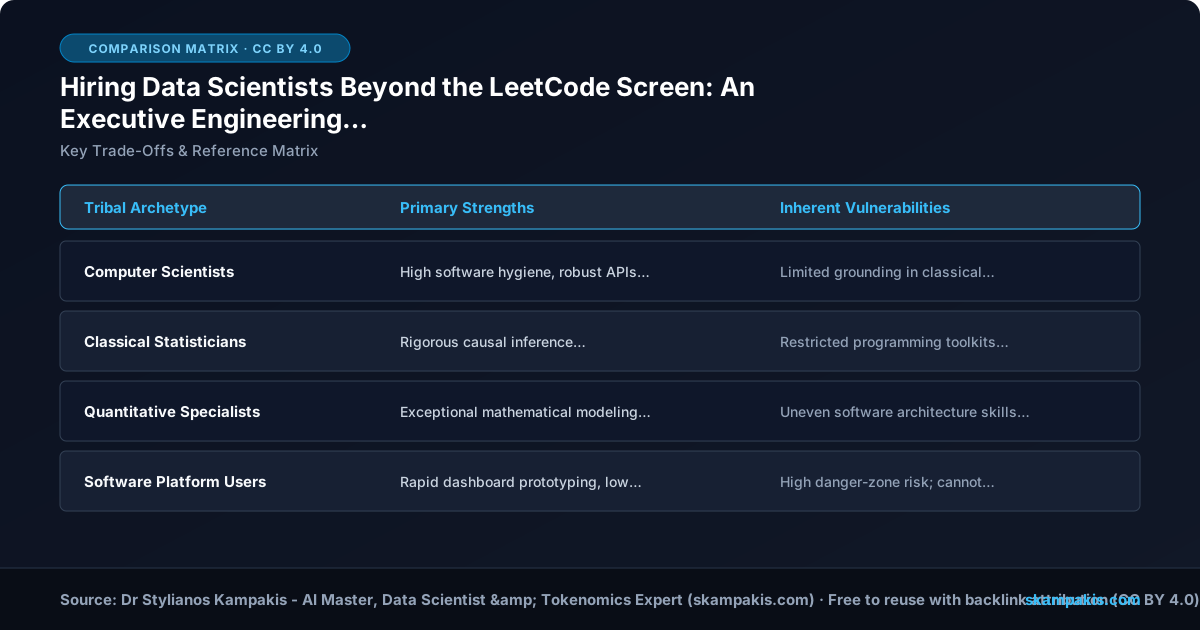
Hiring Data Scientists Beyond the LeetCode Screen: An Executive Engineering Guide
Successfully hiring data scientists requires evaluating a rare triad of skills: code hacking capabilities, deep mathematical and statistical foundations, and substantive domain curiosity. Traditional algorithmic coding tests fail because data scientists treat code as an investigative vehicle rather than an end product, demanding specialized assessment protocols that test analytical reasoning over rote software syntax. Deconstructing…
-
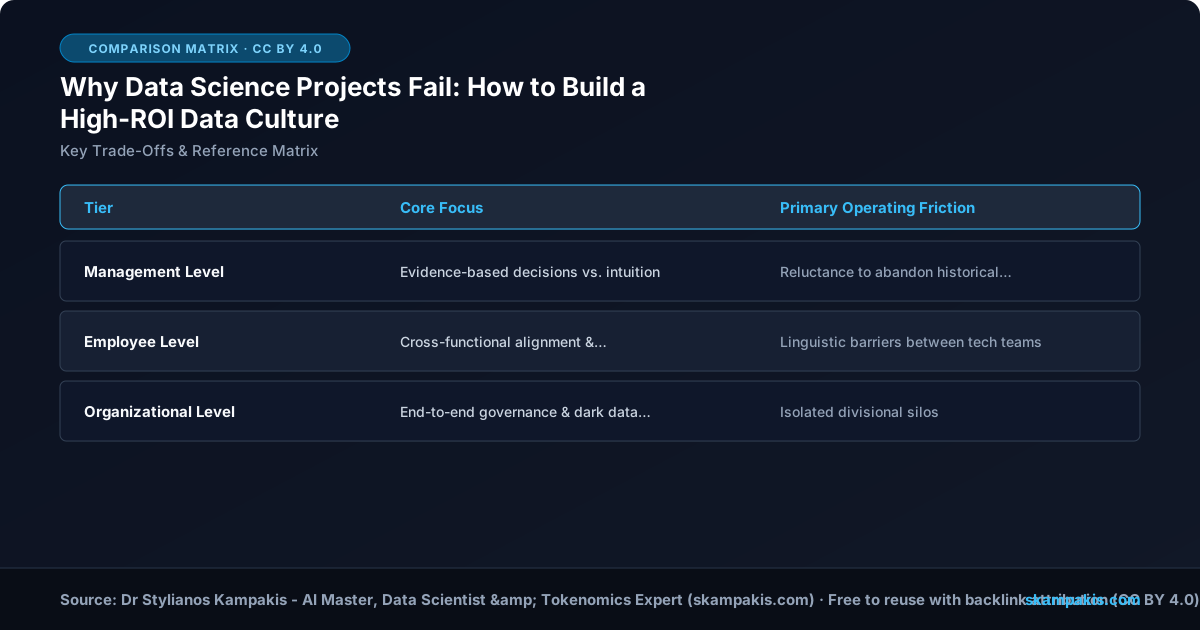
Why Data Science Projects Fail: How to Build a High-ROI Data Culture
Data science initiatives collapse primarily due to organizational friction, communication breakdowns, and intuition-based leadership rather than algorithmic shortcomings. This guide outlines the blueprint for constructing an embedded, high-ROI data culture that bridges technical modeling with strategic business execution.
-
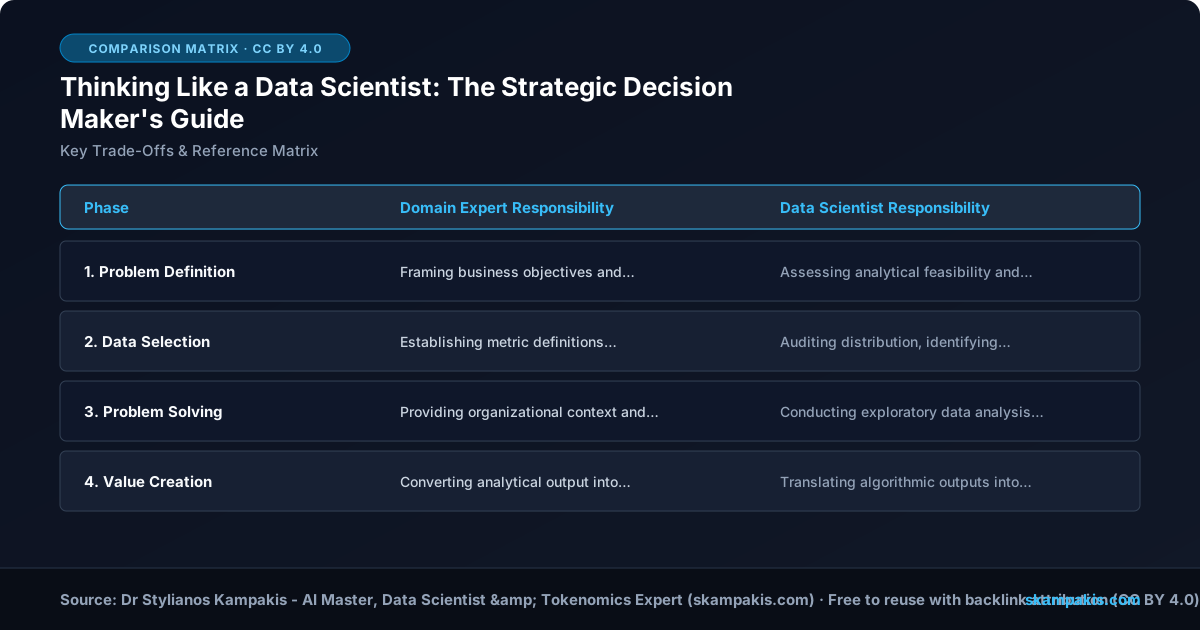
Thinking Like a Data Scientist: The Strategic Decision Maker’s Guide
This strategic guide explains how business leaders can apply data science principles without writing code. By translating operational problems into empirical questions, enforcing rigorous data definitions, and connecting statistical models to measurable value, decision makers can reliably bridge the gap between business strategy and quantitative analysis.