

IoT devices have reached unprecedented growth rates with billions of connected devices worldwide, yet most remain isolated in their closed systems. Inter IoT, which stands for Interoperable Internet of Things, offers the foundational framework, standards, and technology that makes diverse IoT devices, platforms, and networks communicate effectively. This cross-layer approach eliminates barriers between previously incompatible systems and creates truly connected ecosystems.
Smart cities demonstrate IoT’s interdependence value, where different departments run separate systems for transportation, waste management, and emergency response. Inter IoT architecture serves as a multi-layered system that unites devices, networks, and applications despite their technical differences. Azure IoT edge inter module communication aids uninterrupted data exchange at the device level, while inter cloud IoT capabilities extend this connectivity to broader cloud platforms. Inter telecom IoT applications showcase how this interoperability can change urban infrastructure management.
Experts predict Inter IoT platforms and interoperability standards will become the foundation of smart environments by 2025. The system’s original focus on health and transportation logistics in port environments has expanded substantially. This piece examines the architectural layers, communication protocols, and implementation strategies that enable cross-platform device networks in today’s increasingly connected world.
Breaking Down the Inter IoT Architecture
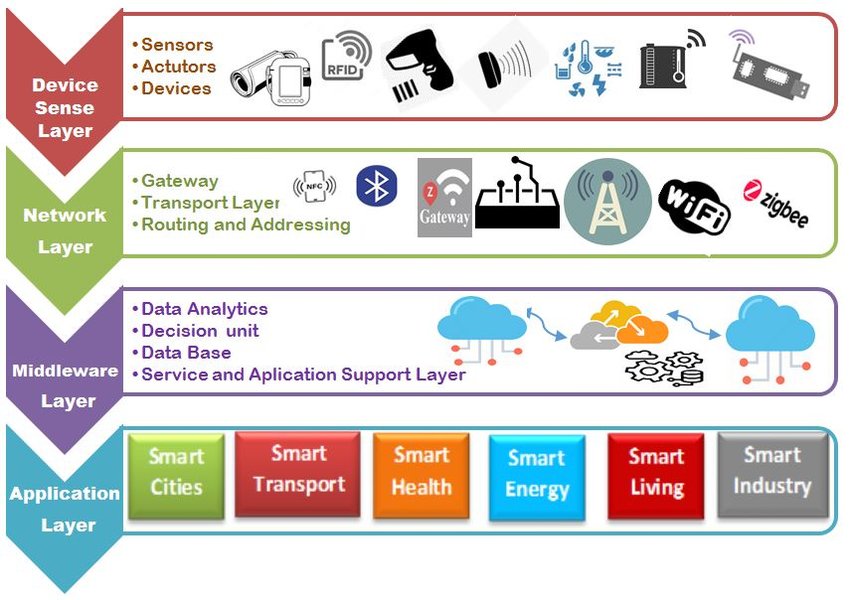
Image Source: ResearchGate
A unified framework lets different devices talk to each other, whatever their makers or technologies. IoT architectures typically have multiple layers that organizations can adapt to their needs. These layers blend together to create smooth integration in mixed environments.
Device Layer: Multi-Protocol Sensor Support
The device layer, also known as the perception layer, serves as the foundation of Inter IoT architecture. Raw data flows from the physical world through sensors, actuators, and identification tech like RFID tags and QR codes. Today’s IoT platforms must work with different elements from multiple vendors who use various protocols and data formats.
Developers face a big challenge with the wide range of devices that have different hardware setups and operating systems. New devices keep coming to market, so developers must stay adaptable and keep learning. Multiprotocol support has become crucial because it lets a single device work with multiple wireless protocols at once.
Multiprotocol wireless SoCs can reduce wireless subsystem BOM and size by up to 40% and make system design easier by cutting down RF components. These chips let devices run different protocols like Bluetooth Low Energy, Zigbee, Thread, and other wireless standards through time-slicing.
Network Layer: Hybrid Network Communication
The network layer helps move data between the perception layer and other parts of the IoT architecture. Two-way communication lets sensors collect data and actuators receive control commands. This layer combines communication networks (short-range, long-range, wired), various protocols, and internet gateways.
A hybrid IoT network combines different wireless technologies like Wi-Fi, Bluetooth, LoRaWAN, NB-IoT, and 5G into one system. These networks pick the best channel based on range, bandwidth, power use, and speed needs instead of using just one protocol. Backscatter communication offers a solution for devices that need to save power by using energy from RF signals to send data.
Common protocols that help devices communicate include:
- MQTT: A lightweight protocol built over TCP/IP to collect data from low-powered devices
- CoAP: A lightweight alternative to HTTP for basic devices
- HTTP/HTTPS: Web-based IoT devices use this, but it’s heavier than MQTT/CoAP
- AMQP: Used in industrial IoT for secure message queuing
- DDS: Enables fast, immediate data exchange in high-risk settings
Middleware Layer: Semantic Interoperability
The middleware layer tackles one of Inter IoT’s toughest challenges: semantic interoperability. Every IoT component must use standard data formats, share how they interpret data, and work with compatible communication protocols.
This layer collects, stores, processes, and analyzes raw data to create valuable insights for decision-makers. Software sits between the data collection platform and applications to process data efficiently and improve scalability.
Semantic technologies like ontologies help devices understand what their shared data means. IoT orchestration platforms can combine and process data from different sources to create a complete picture that single IoT systems can’t show alone. Data normalization also helps higher-level applications work better by reducing their dependence on single suppliers.
Application Layer: Cross-Platform App Integration
User interfaces in the application layer let people control and manage IoT devices. Web and mobile apps, portals, and other software give users access to their IoT devices. This layer shows data visualizations and dashboards with collected information and AI-driven insights.
Cross-platform development saves time by creating one codebase that works everywhere. Tools like Flutter, React Native, and Xamarin let developers write code once and use it on both iOS and Android. Reports show that cross-platform apps cost up to 30% less than making separate iOS and Android versions.
IoT hardware integration with cross-platform apps brings its own challenges. The mix of devices and complex integration needs careful planning. Standard APIs help mobile apps and IoT devices communicate smoothly, making them work better together whatever their makers or protocols.
Communication Protocols Enabling Interoperability
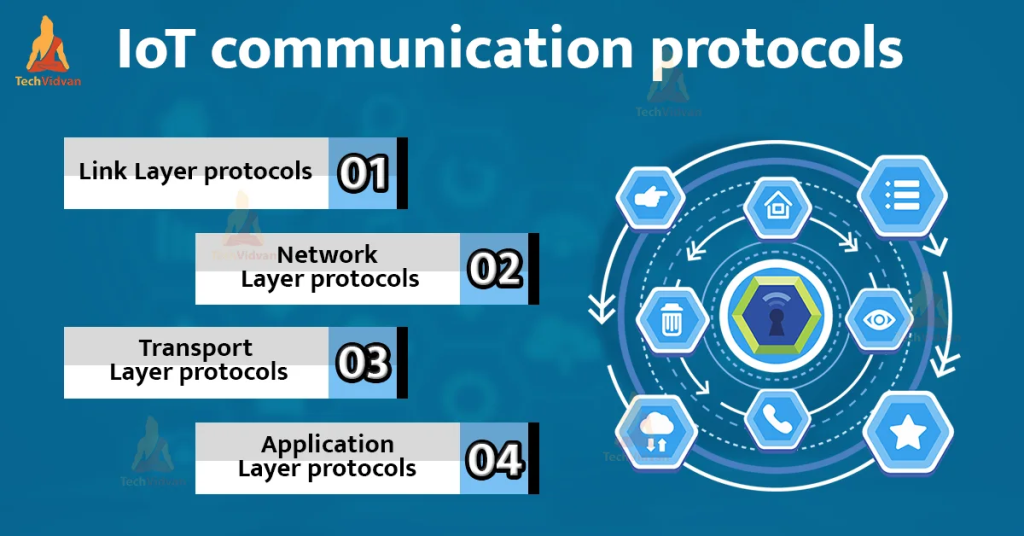
Image Source: TechVidvan
Communication protocols are the foundations of inter IoT architecture. They let different devices share data even when their technical specs don’t match. You need to think about several factors when picking the right protocol: how far it reaches, power usage limits, bandwidth needs, and response times.
MQTT and CoAP for Lightweight Messaging
Message Queuing Telemetry Transport (MQTT) runs on a basic client/server model through TCP/IP. This makes it a great fit when you have limited IoT environments. MQTT is an open, lightweight protocol that’s easy to set up. It uses a publish-subscribe pattern where devices can share information on topics while others tune in to get that data. The protocol gives you three quality of service (QoS) options: QoS 0 for quick “fire and forget” messages, QoS 1 to make sure messages arrive at least once, and QoS 2 to guarantee one-time delivery.
The Constrained Application Protocol (CoAP) works differently as a specialized web transfer protocol defined in RFC 7252. It uses UDP instead of TCP and needs even less overhead than MQTT. This makes it perfect for very resource-limited nodes and networks. The protocol works like HTTP with methods such as GET, POST, PUT, and DELETE, which helps it work smoothly with existing web systems. While it’s not as secure out of the box, CoAP can boost security by using Datagram Transport Layer Security (DTLS).
| Feature | MQTT | CoAP |
| Transport Layer | TCP | UDP |
| Messaging Pattern | Publish-Subscribe | Request-Response |
| Header Size | 2 bytes minimum | 4 bytes minimum |
| Max Message Size | 256MB | Limited by transport |
LoRaWAN for Long-Range Low-Power Communication
LoRaWAN (Long Range Wide Area Network) solves the challenge of long-distance, power-efficient connectivity in IoT systems. This protocol works on unlicensed sub-GHz frequency bands and offers two-way communication with end-to-end security. Data can travel up to 15 km in rural areas and 2-5 km in cities using chirp spread spectrum modulation.
The system uses a star-of-stars layout where devices talk to gateways that send data to network servers. LoRaWAN’s smart data rates help save power and maximize network capacity. Devices running on batteries can last up to 10 years with just one coin cell. These features make it valuable for farming, environmental tracking, and smart city projects where devices spread across big areas.
HTTP/2 for Concurrent Data Streams
HTTP/2 brings major improvements over HTTP/1.1 by fixing issues that slowed down applications. The protocol creates separate streams for each client request and combines them over one TCP connection. This fixes the head-of-line blocking problem from HTTP/1.x and cuts down needed TCP connections.
The protocol squeezes headers smaller through the HPACK algorithm, which makes request and response messages more compact. Servers can now push resources to clients before they ask for them. These upgrades give IoT systems between clouds faster response times, better network usage, and smoother message handling through binary framing.
Protocol Translation in Azure IoT Edge Inter Module Communication
Some IoT devices can’t connect straight to cloud platforms because of protocol limits. Azure IoT Edge helps solve this with two main translation methods: protocol translation and identity translation.
Protocol translation keeps things simple. The IoT Edge gateway holds the only identity with IoT Hub. A translation module gets messages from connected devices, changes them to supported protocols, and sends them forward. While individual devices stay hidden, this method offers a quick way to work with non-standard protocols.
Identity translation takes this further by creating IoT Hub device identities for connected devices. The translation module handles protocols, sets up identities, and converts messages to IoT Hub formats. This lets connected devices work as full members with cloud management, whatever their native protocols.
These translation tools let Azure IoT Edge connect devices that use different protocols, even if they don’t support common IoT standards like MQTT, AMQP, or HTTP.
Tools and Platforms Supporting Inter IoT
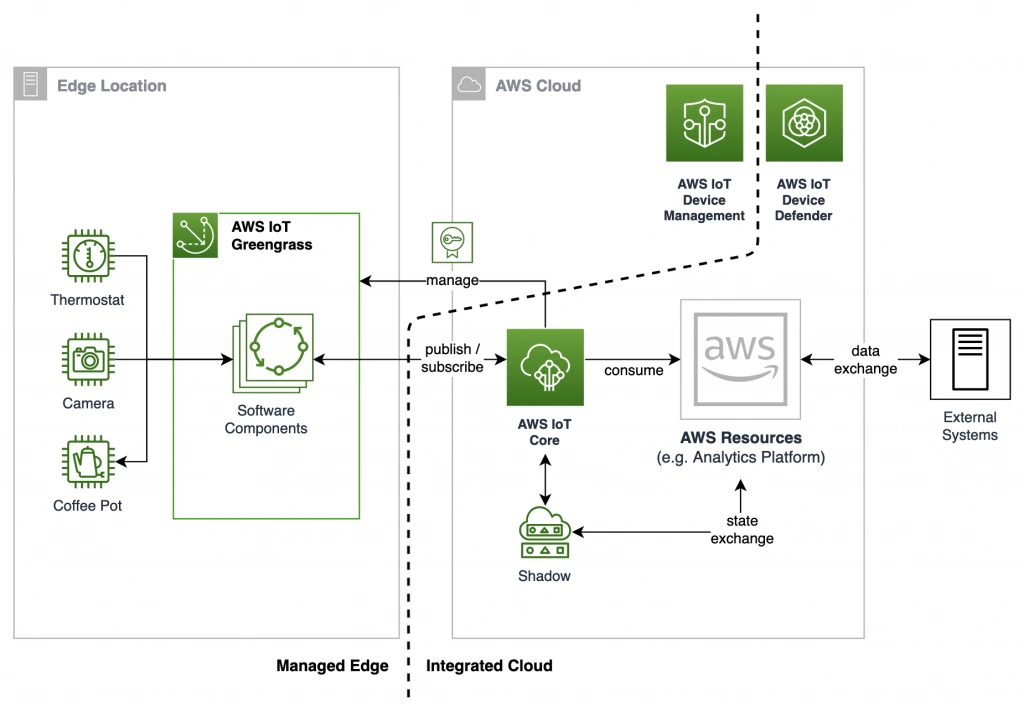
Many innovative platforms and tools help solve the challenges of creating interoperable IoT ecosystems. These solutions connect different devices, networks, and applications through standardized frameworks and special capabilities.
IoTivity for Device Discovery
IoTivity offers an open-source software framework that creates continuous connection between billions of wired and wireless IoT devices. The Open Connectivity Foundation (OCF) developed IoTivity with both Classic and Lite versions that serve as reference models for OCF specifications. This framework works as middleware on operating systems and connectivity platforms of all types. It supports multiple ways to find devices nearby and remotely.
IoTivity standardizes device connections through a well-laid-out approach to device discovery, data transmission, device management, and data handling. The framework works with many physical layers—including Wi-Fi, Ethernet, Bluetooth low energy, Thread, and Z-Wave—while using Internet Protocol at the network layer. Through its protocol plugin manager, IoTivity also works with older protocols like ANT+, Zigbee, and Bluetooth low energy (GATT).
AWS IoT Greengrass for Edge Protocol Translation
AWS IoT Greengrass adds local computing power to edge devices and makes protocol translation easier between different IoT systems. The software runs on Linux-based distributions and Windows for devices with ARM or x86 architectures. Greengrass lets you run AWS Lambda functions, Docker containers, and native OS processes locally, so you don’t need the cloud for time-sensitive operations.
The platform uses component-based architecture where you can deploy and manage software modules remotely. Each component has a recipe (JSON/YAML configuration file), artifacts (code or binaries), and dependencies that show how components relate to each other. This building-block approach makes deployment and updates simpler across device fleets while keeping everything consistent.
To name just one example, AWS IoT Greengrass makes protocol translation easier through special connectors that let devices using different industrial protocols talk to each other. These reusable, adjustable connectors eliminate the need to write custom code when connecting popular services or protocols.
Azure IoT Hub for Cloud Integration
Azure IoT Hub serves as a managed service that connects messages in cloud-based IoT solutions. It handles millions of connected devices and processes millions of events each second, making it perfect for large enterprise deployments. The service runs commands through direct methods, which creates request-reply interactions similar to HTTP calls.
Azure IoT Hub’s standout feature is how well it works with other Azure services to create complete solutions. It connects with Azure Event Grid to react to critical events, Azure Logic Apps to automate business processes, and Azure Machine Learning to implement AI models. This integration helps you tap into the full potential of device data through analytics, machine learning, and AI.
Kura for Gateway Management
Eclipse Kura provides an open-source IoT edge framework that makes developing, deploying, and managing IoT applications at the gateway level easier. Built on the OSGi framework, Kura’s highly modular and dynamic system lets developers add capabilities without disrupting existing systems.
We used Kura to bring intelligence to the edge through local data processing, analytics, and decision-making. This approach cuts down latency, uses less bandwidth, and boosts reliability for IoT systems. The platform works with many industrial communication protocols—including MQTT, Modbus, OPC-UA, and others—making it perfect for connecting different IoT devices and systems.
Kura’s gateway management includes detailed tools for configuration management, monitoring, and firmware updates—all through a user-friendly web interface. The platform runs on many hardware options, including Raspberry Pi, Intel-based gateways, and ARM-based devices, giving you flexibility for different IoT projects.
Implementing Inter IoT in Real Environments
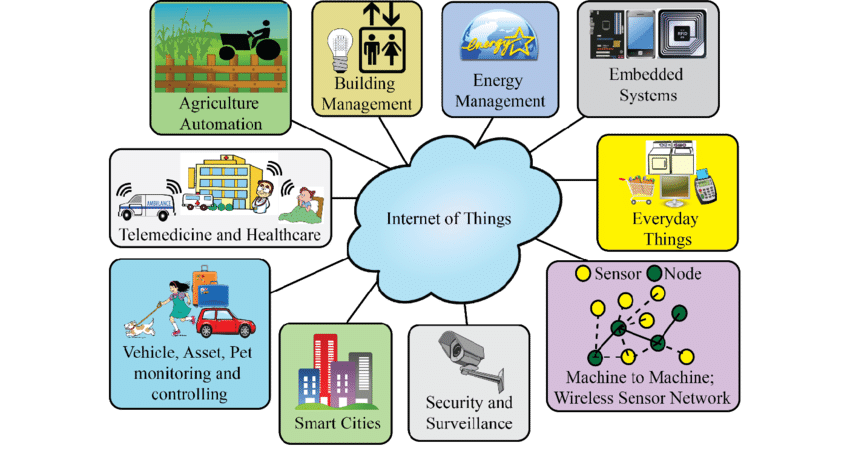
Image Source: ResearchGate
Ground applications showcase inter IoT architecture’s true value in a variety of domains. Organizations can extract better functionality from existing infrastructure and create new opportunities by enabling cross-platform communication between previously isolated systems.
Smart Homes: Unified Control of Multi-Brand Devices
Users struggled with multiple applications and complex setup processes because of the fragmented smart home landscape. Inter IoT solutions now offer standardized approaches that enable unified control. The Matter protocol creates a universal language for smart devices. Tech giants like Apple, Amazon, Google, and Samsung developed this standardized protocol. Smart lights now communicate with locks, thermostats interact with security systems, and users control everything through a single interface.
Smart hubs act as the central nervous system for these cross-brand environments. The Aeotec Smart Home Hub supports multiple technologies like Matter, Zigbee, Z-Wave, Thread, and Wi-Fi. This hub enables control of thousands of devices from hundreds of brands. Homeowners can create personalized automation routines that coordinate actions across different manufacturers’ devices. A single command can open blinds, turn on speakers, and adjust lights.
Smart Cities: Inter Telecom IoT for Urban Infrastructure
Telecommunications operators provide the backbone of smart city infrastructure. These operators create the connectivity framework for IoT systems that monitor and manage urban environments. Cities use interconnected networks to implement intelligent systems for traffic management, public safety, waste collection, and utility services.
Smart traffic management systems represent successful inter telecom IoT implementation. Cities can adjust signal timings based on current conditions using sensors that assess traffic in real-time. This system reduces congestion during peak hours by prioritizing public transportation and cyclists. Waste management improves through IoT integration with smart bins that monitor fill levels and optimize collection routes. This optimization reduces unnecessary trips and lowers operational costs.
Telecommunications’ integration with IoT platforms benefits urban environments through:
- Real-time data exchange for critical infrastructure management
- Better public safety with connected monitoring systems
- City operations’ efficiency through informed decision making
- Lower resource wastage and operational costs
Healthcare: Cross-Device Patient Data Aggregation
Healthcare providers use inter IoT systems to combine patient data from various sources into unified platforms. Modern health-data-sharing platforms collect and merge information from electronic health records (EHRs), pharmacies, patient-generated health data from personal digital devices, and patient-reported outcome measures.
The Hugo platform shows how patients link their health system portals while connecting personal devices. These devices include Fitbit trackers, Withings scales, and specialized medical equipment like Kardia Mobile devices. This detailed approach to data aggregation helps assess patient status, recovery, and treatment adherence effectively.
Patient-generated health data (PGHD) integration affects healthcare significantly. Patients and clinicians develop better strategies for preventing and managing acute and chronic conditions by learning about day-to-day health conditions. The COVID-19 pandemic sped up PGHD adoption as healthcare providers looked for remote monitoring solutions during social distancing.
These inter IoT implementations show how breaking down barriers between isolated systems creates more efficient, responsive, and user-centered environments. This integration improves quality of life while optimizing resource use.
Standards and Frameworks for Future Compatibility
Interoperability standards are the life-blood of lasting IoT ecosystems. Connected devices multiply each day, and these frameworks ensure devices from different manufacturers work together whatever their underlying technologies.
W3C Web of Things Metadata Models
The World Wide Web Consortium’s Web of Things (WoT) offers a standardized way to describe IoT devices through metadata models. The Thing Description (TD) acts as an entry point for IoT devices—similar to an index.html page for websites. This information model helps machines understand IoT device metadata, interfaces, and interactions.
JSON format encodes Thing Descriptions and supports JSON-LD processing. This creates a strong base to represent knowledge about connected devices. The TD has five main parts: textual metadata, interaction affordances, data schemas, security definitions, and web links to other things or documents. This detailed approach lets devices understand both communication methods and the meaning behind exchanged data.
WoT models feature three interaction types: Properties to sense and control parameters, Actions to model physical processes, and Events for push-based notifications. The Thing Model serves as a template that focuses on data model definitions when a full Thing Description isn’t needed.
OCF Specifications for Vendor-Neutral Integration
The Open Connectivity Foundation (OCF) creates free ISO/IEC specifications that build trust and interoperability between IP-connected IoT devices. More than 500 members work together across enterprise infrastructure layers. OCF builds an environment where devices communicate over IP whatever their form factor, operating system, or ecosystem.
The framework has core specifications for infrastructure, security, bridging, and devices. Its Resource Model supports domain-agnostic resources that work in markets of all sizes. OCF makes use of dedicated IoT protocols like CoAP, optimized for constrained devices while following RESTful architecture principles.
OCF’s Secure IP Device Framework tackles security through detailed onboarding procedures and specific access controls. Devices in a secure domain use access controls to set exact permissions based on resources and allowed methods. This lets guests read a thermostat’s temperature but prevents them from changing settings.
IEEE P2668 for Universal Interoperability
IEEE P2668 is a new standard that focuses on universal IoT interoperability through its IoT Maturity Index (IDex). This global standard offers a consistent scoring system to review IoT devices based on cybersecurity, privacy, and reliability. Higher Maturity Index scores indicate better IoT performance in these critical areas.
The standard combines a wireless transducer interface module with network-capable application processors. This design aims to create more efficient and secure interoperability solutions for a variety of domains—from healthcare and manufacturing to smart energy, logistics, and agriculture.
IoT interoperability standards will keep evolving through 2025. The combination of IEEE P2668, OCF specifications, and W3C Web of Things frameworks speeds up inter IoT platform adoption. These approaches complement each other and address different interoperability challenges. Together, they build foundations for truly integrated systems that work across vendors.
Scalability and Security in Inter IoT Systems
IoT ecosystems continue to grow at an incredible rate, making scalability and security increasingly connected challenges. Connected devices will surge to 30.9 billion by 2025, which creates an urgent need for resilient security measures that can grow with expanding networks.
Handling Device Onboarding at Scale
Organizations just need strategic ways to handle device onboarding when scaling IoT deployments to millions of devices. Systems can get overwhelmed when too many devices try to connect at once, so staggered registration schedules become essential. To name just one example, see how a registration rate of 200 devices per minute requires careful batch size configuration to prevent throttling.
Devices should first try using cached credentials rather than starting complete reprovisioning when reconnecting after power outages or firmware updates. This reduces unnecessary traffic to provisioning services. Large-scale deployments require multiple IoT hubs since a single hub typically supports up to 1 million devices plus modules.
Data Privacy in Inter Cloud in IoT
Inter cloud environments create unique privacy challenges as sensitive data moves between multiple platforms. Strong data privacy in these systems depends on properly handling the collection, processing, and protection of sensitive information against breaches. Major privacy risks include surveillance tracking, poor consent mechanisms, and unauthorized third-party data sharing.
The European Commission understands these challenges and has created a Cybersecurity Strategy for the Digital Decade. Their goal is to build an “Internet of Secure Things”. This strategy helps fix device and network vulnerabilities through secure frameworks that work across industries, from healthcare to energy and transportation.
Security Policies Across Heterogeneous Networks
Heterogeneous IoT networks require flexible security approaches that adapt to different device capabilities. Traditional security methods don’t deal very well with device limitations and constraints. Role-based security strategies offer a better solution by limiting user device manageability while improving monitoring capabilities for faster corrective actions.
Several frameworks tackle these challenges:
- SEMIoTICS created a pattern-driven approach that connects security, privacy, and interoperability of individual smart objects
- SOFIE built secure federation architecture using distributed ledger technologies, which enables unlimited scalability while keeping end-to-end security
These frameworks provide programmable networking mechanisms and prioritize privacy by design. Users retain control over their data even after cloud storage—a key requirement for GDPR compliance.
FAQs
1. What is Inter IoT architecture and why is it important?
Inter IoT architecture is a framework that enables diverse IoT devices, platforms, and networks to communicate effectively across different systems. It’s important because it breaks down barriers between previously incompatible systems, creating truly connected ecosystems in smart homes, cities, and various industries.
Q2. How does the middleware layer in Inter IoT architecture work?
The middleware layer in Inter IoT architecture addresses semantic interoperability. It ensures that all IoT components use standardized data formats, share data interpretation mechanisms, and employ compatible communication protocols. This layer processes and analyzes raw data to generate valuable insights for decision-makers.
Q3. What are some key communication protocols used in Inter IoT systems?
Some key communication protocols in Inter IoT systems include MQTT and CoAP for lightweight messaging, LoRaWAN for long-range low-power communication, and HTTP/2 for concurrent data streams. These protocols enable efficient data exchange between diverse IoT devices and platforms.
4. How do tools like AWS IoT Greengrass and Azure IoT Hub support Inter IoT?
AWS IoT Greengrass brings local compute capabilities to edge devices and facilitates protocol translation between disparate IoT systems. Azure IoT Hub acts as a central message hub for cloud-based IoT solutions, scaling to millions of connected devices and integrating seamlessly with other Azure services for comprehensive IoT management.
5. What are the main challenges in implementing Inter IoT systems at scale?
The main challenges in scaling Inter IoT systems include handling device onboarding for millions of devices, ensuring data privacy across multiple cloud platforms, and implementing security policies across heterogeneous networks. These challenges require strategic approaches to device provisioning, robust data protection measures, and adaptive security frameworks.
Atlas Paragon Small Business Operations & Security Guides
Independent, evidence-backed checklists for small-business software selection, accounting workflows, and security.