

Every time you connect to Wi-Fi, send an email, join a video meeting, or stream your favorite show, your device exchanges thousands of pieces of information with other devices across a network. Although this communication happens almost instantly, it depends on a carefully organized process. Without clear rules governing how devices share a network, simultaneous transmissions would interfere with one another, resulting in delays, lost data, and unreliable connections.
Media Access Control (MAC) provides those rules. Rather than allowing every device to transmit data whenever it wants, MAC determines how devices access a shared communication medium, helping them communicate efficiently while minimizing conflicts. Whether you’re using a wired Ethernet connection or a wireless Wi-Fi network, these rules keep information flowing smoothly behind the scenes.
Imagine a busy road intersection without traffic signals. If every driver tried to cross at the same time, congestion and accidents would quickly follow. Traffic lights don’t move vehicles—they organize movement so everyone can travel safely and efficiently. Media Access Control serves the same purpose inside a network. It doesn’t carry data itself; instead, it coordinates when devices communicate, allowing the network to function reliably even under heavy demand.
Although most users never notice it, this coordination is happening constantly. From a small home network to a large enterprise infrastructure, MAC quietly helps connected devices share communication resources in an orderly and predictable way.
In Simple Terms
Media Access Control is a set of networking rules that determines when devices can send data across a shared communication channel. By coordinating access to the network, it reduces communication conflicts, improves efficiency, and helps data move reliably between connected devices.
The Rules Behind Every Reliable Network
Whenever multiple devices connect to the same network, they also share the same communication medium. That medium might be an Ethernet cable, a Wi-Fi signal, or another networking technology, but the challenge remains the same: every device needs an opportunity to transmit data without disrupting others.
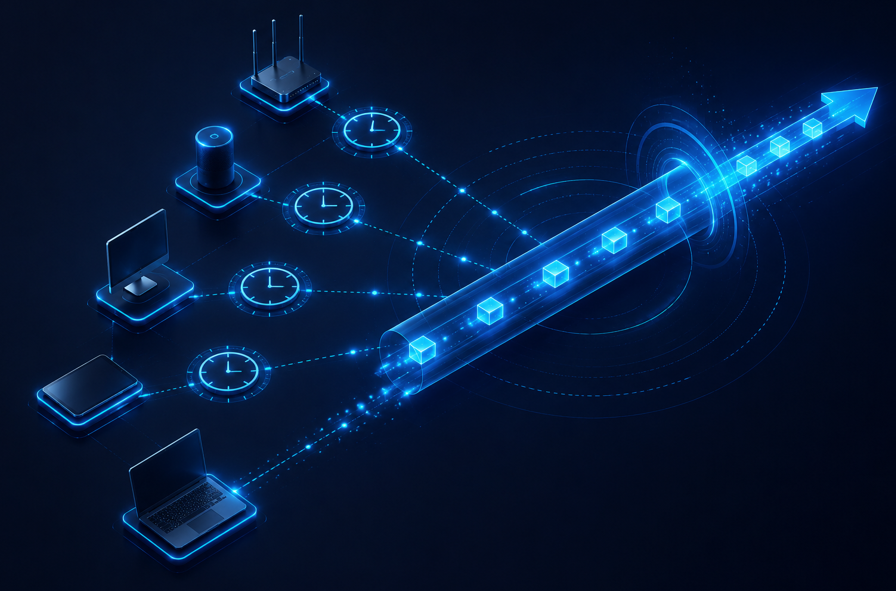
Media Access Control solves this challenge by defining how devices behave while sharing the network. Instead of competing randomly for access, each device follows established rules that determine when it can transmit, when it should wait, and how it should respond if the communication channel is already in use. These decisions occur in fractions of a second, allowing networks to remain stable even when many devices are active simultaneously.
Technically, Media Access Control operates within the Data Link Layer of the OSI model as the MAC sublayer defined by the IEEE 802 networking standards. While the terminology may sound complex, its purpose is straightforward: organize communication between devices sharing the same local network before data continues to higher networking layers.
Its importance grows alongside modern connectivity. A single computer presents little challenge, but today’s homes, offices, factories, and data centers often contain dozens—or even hundreds—of devices communicating simultaneously. As networks expand, efficient coordination becomes just as important as transmission speed. MAC provides that coordination, ensuring every connected device can access the network without creating unnecessary congestion or delays.
When Every Device Wants to Communicate
Consider a busy office on a Monday morning. Employees are sending emails, attending video meetings, accessing cloud applications, printing documents, and transferring files—all at nearly the same time. Every action generates network traffic, and every connected device wants immediate access to the communication channel.
Without coordination, devices attempting to transmit simultaneously could interfere with one another. Because many networks rely on a shared communication medium, only a limited amount of data can travel through it at any given moment. When multiple devices send data simultaneously, their signals can overlap, creating a collision that may require affected information to be transmitted again. Repeated collisions increase network traffic, reduce efficiency, and slow overall performance.
Media Access Control replaces that competition with coordination. Rather than allowing unrestricted access, it applies communication rules that determine the appropriate moment for each device to transmit. Some devices proceed immediately, while others briefly wait until the channel becomes available. These decisions happen within milliseconds, yet they significantly influence how efficiently a network performs.
MAC also promotes fairness. Every connected device should receive a reasonable opportunity to communicate without one system monopolizing available bandwidth. As networks continue growing in size and complexity, maintaining that balance becomes increasingly important.
Think of a customer service desk where visitors take numbered tickets before speaking with an agent. Instead of everyone crowding the counter at once, each person waits for their turn, allowing the process to remain organized and efficient. Media Access Control applies the same principle to networking by ensuring devices communicate in an orderly manner rather than competing chaotically for the same communication path.
As networking technologies evolved, different environments adopted different approaches for managing this process. Although the methods vary, they all pursue the same objective: organized, reliable communication across shared networks.
Giving Every Device the Right Time to Speak
Once a network establishes communication rules, the next step is deciding exactly when each device can transmit data. Although this process happens in milliseconds, it plays a crucial role in maintaining reliable network performance. Every email, webpage request, or file transfer begins with the same question: Is the communication channel available?
Rather than transmitting immediately, a device first follows the network’s access rules. If the shared medium is already in use, it waits until the channel becomes available. Once it’s allowed to transmit, the device sends its information in small units called frames, enabling the receiving device to process the data accurately and efficiently.
Without this coordination, multiple devices could attempt to transmit simultaneously, causing interference and forcing data to be retransmitted. Even brief interruptions can reduce network efficiency when multiplied across hundreds or thousands of connected devices.
Different networking technologies solve this challenge in different ways, depending on how they operate. Traditional shared Ethernet networks used Carrier Sense Multiple Access with Collision Detection (CSMA/CD). Devices first listened to determine whether the communication channel was free. If it was, transmission began. If two devices happened to transmit simultaneously, both detected the collision, stopped sending, waited for a randomly selected interval, and then tried again. This approach minimized repeated conflicts while giving every device another opportunity to communicate.
Wireless networks face a different challenge. Because Wi-Fi devices cannot always detect every transmission taking place around them, they typically rely on Carrier Sense Multiple Access with Collision Avoidance (CSMA/CA). Instead of reacting after a collision occurs, devices attempt to prevent one by listening for activity, waiting if the channel is busy, and introducing carefully timed delays before transmitting. This proactive approach improves reliability in environments where many devices share the same wireless access point.
Think of an online meeting where participants naturally wait for someone to finish speaking before contributing. If two people begin talking at the same time, they pause, allow one person to continue, and then resume the conversation. Network devices behave in much the same way, following communication rules that keep data flowing without unnecessary interruptions.
Although the techniques differ, the objective remains consistent: enable every connected device to communicate efficiently while minimizing delays and avoiding unnecessary conflicts.
Different Networks, Different Ways to Stay Organized
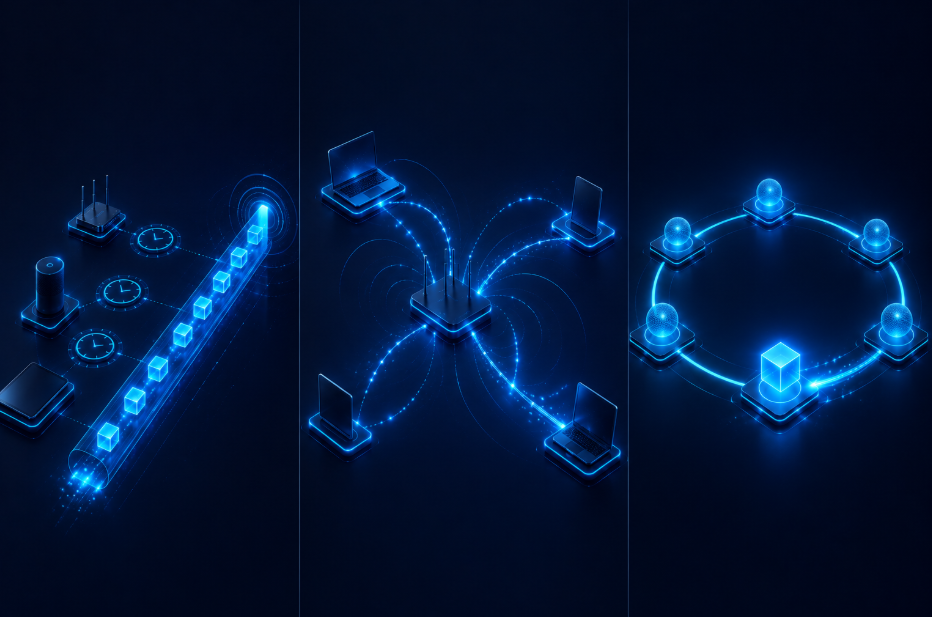
No single Media Access Control method is ideal for every networking environment. Factors such as network architecture, communication medium, and the number of connected devices all influence how access should be managed. As a result, several MAC methods have evolved, each designed for specific operating conditions.
CSMA/CD became the standard for early shared Ethernet networks. Devices listened before transmitting, detected collisions if they occurred, and retried after waiting for a random period. While highly effective for shared Ethernet, this method is now rarely needed because modern switched Ethernet provides dedicated communication links that virtually eliminate collisions.
CSMA/CA remains the preferred approach for Wi-Fi networks. Since wireless devices cannot always detect every transmission, they focus on avoiding collisions rather than detecting them afterward. By checking whether the channel is busy and waiting before transmitting, wireless networks maintain stable performance even when many users share the same access point.
Another early Media Access Control protocol is ALOHA, one of the simplest approaches ever developed. Devices transmitted whenever they were ready, and if a collision occurred, they simply waited for a random interval before trying again. Although inefficient by modern standards, ALOHA introduced concepts that influenced many later access-control protocols.
Some specialized industrial and mission-critical environments use Token Passing. Instead of allowing every device to compete for network access, a small control message called a token circulates around the network. Only the device holding the token may transmit data. Once finished, it passes the token to the next device. This virtually eliminates collisions while providing predictable communication, making it valuable in applications where consistent timing is more important than maximum throughput.
Despite their differences, these methods all pursue the same goal: ensuring devices share communication resources efficiently and predictably. Media Access Control is therefore not a single protocol but a broader networking concept that enables different technologies to organize communication according to their specific requirements.
This flexibility explains why MAC remains fundamental across modern networking technologies—from wired office networks and home Wi-Fi to industrial automation systems and specialized communication infrastructures.
Working Quietly Behind the Networks You Use Every Day
Most people never think about Media Access Control while browsing the internet, joining video calls, or transferring files because it operates silently in the background. Yet nearly every modern network depends on it to keep communication reliable.
In a typical home, smartphones, laptops, smart TVs, gaming consoles, voice assistants, and other connected devices all compete for the same Wi-Fi connection. Media Access Control coordinates their access, helping the network remain responsive even when several devices are active simultaneously.
The same principle applies on a much larger scale in business environments. Office networks often connect hundreds of computers, servers, printers, security systems, cloud services, and communication platforms. Without organized access to the network, congestion would increase rapidly, reducing performance and productivity. MAC helps maintain efficient communication without users ever noticing the coordination taking place behind the scenes.
Its role extends beyond homes and offices into healthcare, education, manufacturing, transportation, and industrial automation, where dependable communication is often essential for daily operations. Although these environments use different technologies, they all rely on the same underlying principle: connected devices must share network resources in an organized manner.
Did you know?
Every time your phone reconnects to your home Wi-Fi after you unlock it, Media Access Control is already coordinating communication with every other connected device—usually so quickly that you never notice the process.
As our world becomes increasingly connected, these communication rules continue to support everything from small home networks to large enterprise infrastructures, ensuring reliable data exchange across millions of devices every day.
Media Access Control Isn’t the Same as a MAC Address
One of the most common networking misconceptions is that Media Access Control and a MAC address refer to the same thing. While they share the same abbreviation, they serve entirely different purposes.
Media Access Control (MAC) is the set of rules that governs how devices share a communication medium. It determines when devices can transmit data and how they should behave while communicating on a shared network.
A MAC address, by contrast, is a unique hardware identifier assigned to a network interface, such as a computer’s Ethernet port or Wi-Fi adapter. Its purpose is to identify a specific device on a local network, much like a postal address identifies the destination of a letter. While Media Access Control organizes the communication process, the MAC address identifies where the data should be delivered.
Think of a city road network. Media Access Control functions like the traffic management system that regulates vehicle movement, while a MAC address is the street address that tells drivers where they need to go. One manages traffic; the other identifies the destination.
Understanding this distinction makes networking concepts much easier to follow, especially when working with Ethernet, Wi-Fi, switches, routers, and other network technologies where both terms frequently appear.
Common misconception:
A MAC address does not control when a device communicates. It simply identifies the device. Managing access to the network is the responsibility of Media Access Control.
Why Media Access Control Matters More Than Ever

Modern networks are far more complex than they were just a decade ago. Homes now contain smartphones, laptops, smart TVs, gaming consoles, security cameras, voice assistants, and dozens of IoT devices, while businesses rely on cloud services, remote collaboration, intelligent automation, and connected infrastructure. Every additional device increases demand for efficient network coordination.
Media Access Control has evolved alongside these changes. Although most users never interact with it directly, it continues adapting to faster hardware, wireless technologies, and increasingly dense network environments. Regardless of whether data travels across a home Wi-Fi network, a high-speed enterprise backbone, or an industrial automation system, organized communication remains essential.
Its importance becomes even more apparent with emerging technologies such as the Internet of Things (IoT), edge computing, smart manufacturing, and connected infrastructure. These environments may involve thousands of devices exchanging information simultaneously, making efficient access management critical to maintaining reliable performance.
Rather than being a visible feature, Media Access Control is one of the hidden foundations of modern networking. Every webpage that loads quickly, every uninterrupted video stream, and every successful file transfer depends on devices communicating in an organized manner. As digital connectivity continues to expand, MAC will remain fundamental to ensuring networks operate efficiently, reliably, and at scale.
Conclusion
Modern networking depends on far more than high-speed hardware and increased bandwidth. Every connected device must also know when it can communicate, ensuring shared network resources are used efficiently without unnecessary conflicts.
That is precisely the role of Media Access Control.
By coordinating access to a shared communication medium, MAC enables devices to exchange data reliably across Ethernet, Wi-Fi, and many other networking technologies. Different environments may use different access methods—such as collision detection, collision avoidance, or token-based communication—but they all serve the same purpose: keeping network communication organized, efficient, and dependable.
The next time you send a message, stream a movie, upload a file, or join a video conference, Media Access Control is already working behind the scenes. You may never configure it or even notice it, but it remains one of the essential technologies that allows billions of connected devices to communicate smoothly every day.
Atlas Paragon Small Business Operations & Security Guides
Independent, evidence-backed checklists for small-business software selection, accounting workflows, and security.