

Did you know traders can open and close up to 100 trades in a single day with fast track trading?
Quick trades and instant profits drive this trading style that targets short-term price movements. The practice has mixed reviews. Some traders praise the support team and funding access. Others wait up to 45 days or longer to get their money. Platforms like Fast Track Trading face questions about their team’s decisions.
Many traders still explore fast track trading strategies, prop firm options, and futures trading opportunities. You might wonder “is fast track trading legit?” or need to understand its rules. This detailed guide will help you understand everything from basics to advanced strategies. You’ll learn to direct your trades in this high-speed environment with confidence while managing your risks properly.
Understanding Fast Track Trading
Fast track trading brings a fresh approach to financial markets. Traders can now profit from short-term price movements without traditional entry barriers. This new method gives quick access to funded trading accounts instead of long evaluation periods that conventional trading demands.
What is fast track trading?
Traders use fast track trading to open and close positions quickly. They profit from rapid price changes and can withdraw their earnings right away. The focus stays on grabbing market opportunities now rather than waiting years for investment returns.
Fast Track Trading operates as a proprietary trading firm from Orlando, Florida. The company started in 2024 [link_1] and gives traders funded accounts without long evaluation processes. Traders pay once to get instant funding instead of monthly fees.
The company’s 20% consistency rule stands out. Traders must trade for at least 10 days. No single day can make up more than 20% of their total profits during that time. This approach creates steady, disciplined trading habits instead of risky moves or overusing leverage.
On top of that, the platform gives traders great benefits like:
- A 90% profit share
- Premium tools including Level 2 data, Bookmap, and Quantower
- The chance to copy trade across 20 personal and 20 business accounts
How it differs from traditional trading
Traditional traders hold positions for weeks or years. Fast track traders work with immediate price moves and often complete several trades in one day.
The way traders get started is different too. Most prop firms make traders pass tests first. Fast Track Trading skips this step and gives direct access to funded sim accounts. Traders can focus on making money instead of passing evaluations.
Fast track trading relies more on technical analysis than fundamental analysis. Quick trades mean traders watch charts, patterns, and indicators closely instead of economic factors or company basics.
Risk management works differently here. Traders follow a 5% trailing drawdown limit. This means entry and exit points must be precise. Quick decisions and strict discipline become crucial skills that improve with practice.
Is fast track trading legit?
Fast Track Trading runs as a real company. You can find them in Red Bank, NJ, with a phone number and support email. UK company records show them as active.
The British Columbia Securities Commission warns that Fast Track Trading lacks registration with them. They suggest extreme caution before sending money. This warning shows why traders need to research carefully.
Smart traders should read reliable reviews and know all rules before starting. The instant funding model looks great but carries big risks. This makes it better suited for traders who know high-speed trading well.
Research matters a lot here. Check if the company follows rules in your area. Make sure you understand how they manage risk, share profits, and handle withdrawals before jumping in.
Top Fast Track Trading Strategies
Fast track traders who succeed rely on specific strategies that exploit quick market movements. These traders need discipline, technical analysis skills, and proper execution to make consistent profits.
Scalping for quick profits
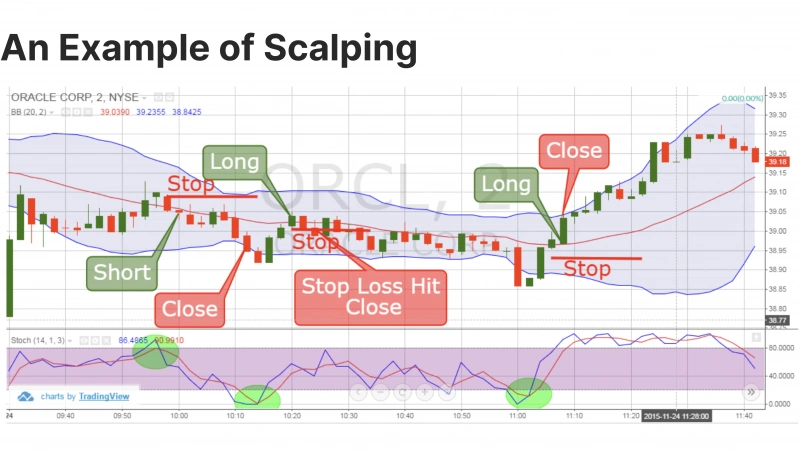
Scalping is a high-frequency trading method that aims to capture small, quick profits from short-term price movements. Scalpers focus on speed and efficiency, unlike traditional traders. They execute dozens of trades in one session. This method needs traders to spot minor price changes that happen within seconds or minutes.
Here’s how to make scalping work in fast track trading:
- Use technical indicators like moving averages, Bollinger Bands, or Stochastic Oscillator to spot short-term patterns
- Look at 1-minute or 5-minute charts to catch quick price moves
- Pick highly liquid markets like forex, cryptocurrencies, or major stocks
Risk management is the life-blood of scalping because traders make many trades. Smart scalpers use tight stop-losses just below support or above resistance levels to keep losses small. They also size positions carefully—putting only a small part of their capital into each trade to avoid too much leverage.
Day trading for daily gains
Day trading involves opening and closing positions in the same trading day to avoid overnight risk. This strategy is the life-blood of fast track trading that needs technical analysis, discipline, and market awareness. Most day traders make up to five trades daily, and these can last minutes or hours.
Day trading that works needs clear trade setups with specific entry and exit points based on patterns or indicators. Traders often follow trends using MACD, trade breakouts when prices push through key support or resistance levels, and use mean reversion to find overbought or oversold conditions.
A trader’s mindset matters because day trading tests emotions. Traders must stick to their strategy, handle losses well, and avoid trading too much.
Arbitrage opportunities across platforms
Arbitrage traders buy assets at lower prices on one platform and sell them right away at higher prices on another. This strategy makes money from price differences between exchanges or markets that don’t last long.
Price gaps happen because of different liquidity levels and order fill times across exchanges. A trader might buy a dual-listed stock cheaper in one market and sell it right away for more in another market to pocket the difference.
These price gaps are low-risk chances to make money, so many traders try to catch them. Quick action leads to bigger profits. Trading bots and algorithms are now crucial to find and execute these trades fast.
Using algorithmic trading for speed and precision
Algorithmic trading uses math models to automatically trade based on preset rules. Fast track traders can execute thousands of orders in split seconds this way and maximize gains from tiny price moves.
The biggest benefits are:
- Data analysis faster than any human
- Trading without emotions, just logic and rules
- Quick execution to catch fleeting opportunities
High-frequency trading (HFT) uses super-fast networks and computers to trade in millionths of a second. These systems can spot price differences for arbitrage and place orders quickly.
Fast track traders who want steady results find that algorithmic trading gives them speed, precision, and freedom from the mental traps that often hurt manual trading.
Setting Up with a Fast Track Trading Prop Firm
Image Source: QuantInsti Blog
Success in the ever-changing market environment starts with picking the right proprietary trading firm. Traders looking to access funded accounts right away will find Fast Track Trading’s approach quite different from evaluation-based firms.
Choosing the right prop firm
Traders need to prioritize transparency, payout conditions, and quality support in their search. Fast Track Trading, 2024 old and based in Orlando, Florida, stands out by offering instant funding without evaluations and no monthly fees.
Smart traders should think over:
- The firm’s track record and history
- How profits are split and paid out
- Trading platforms and tech tools you can use
- Rules about risk and drawdown limits
Fast Track Trading gives traders a 90% cut of profits. They also provide premium tools like Level 2 data, Bookmap, and Quantower. The option to copy trade across multiple accounts makes this a great way to get deeper insights.
Fast track trading reviews: what to look for
Trustpilot ratings are a great way to learn about trader experiences. Fast Track Trading earned 4.5/5.0 after 685 reviews, showing positive trader satisfaction.
Notwithstanding that, recent growing pains have led some reviewers to report payout delays and support problems. This is a big deal as it means that 80% of reviews during certain 30-day periods were 1-star. Recent feedback deserves extra attention.
Reviews should focus on:
- How reliable and quick payouts are
- Support team’s response time
- Platform performance during market swings
- Clear communication about rule changes
Understanding fast track trading rules
Fast Track Trading uses specific rules to encourage disciplined trading. The 20% consistency rule keeps daily profits under 20% of total payout period profits. This pushes traders toward steady strategies instead of risky all-or-nothing moves.
More rules include:
- A 5% trailing drawdown limit calculated daily
- Trading at least 5 days for first payout, then 10 days after
- Hitting a 5% profit target before first payout
Eight successful payouts double your withdrawal limits. Twelve payouts let you request unlimited withdrawals or qualify for a live account. This reward system encourages consistent performance and smart risk management.
Risk Management and Trading Psychology
Successful fast track trading depends on risk management and psychological discipline. The ever-changing nature of this trading style makes both rewards and risks more significant, which makes proper controls necessary.
Managing leverage and drawdowns
Leverage acts as a double-edged sword in fast track trading. It can multiply profits but also magnify losses significantly. Professional traders set themselves apart by following the 1-2% rule—they never risk more than 1-2% of total capital on any single trade. A trader with a GBP 7941.60 account should risk no more than GBP 79.42-158.83 per trade.
Most fast track trading prop firms enforce a 5% trailing drawdown limit. Your minimum balance threshold adjusts to GBP 38913.85 if your account reaches GBP 794.16 in unrealized profit. This protects your gains while maintaining discipline.
Avoiding emotional decisions
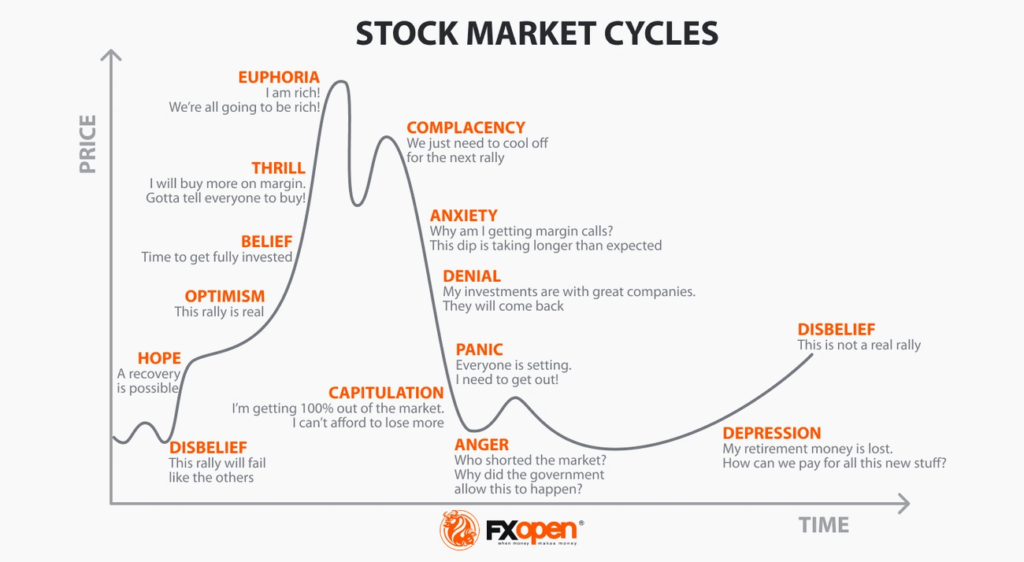
Leverage intensifies emotional stress psychologically and often leads to mistakes like revenge trading or early exits. Traders often make a crucial error after losing streaks by increasing their risk to recover losses quickly—exactly when they should reduce their exposure.
These steps help maintain emotional control:
- Take a 5-minute break before increasing position size after a loss
- Keep a trading journal to track your emotions and identify patterns
- Set bracket orders to define your risk-reward plan before execution
Setting realistic profit targets
Smart traders base their profit goals on historical market data and current conditions rather than wishful thinking. A clear risk-reward ratio should connect your profit targets directly to your risk management strategy.
Technical analysis helps establish profit targets, especially when you use support and resistance levels to set realistic exit points. Consistency matters more than occasional big wins—this principle shows in the 20% consistency rule that many prop firms enforce.
Tools and Platforms for Fast Track Trading
Trading performance depends heavily on the technology infrastructure used in fast track trading. The right tools can make the difference between profits and losses as markets change quickly.
Best platforms for fast execution
Fast Track Trading prop firm supports several high-performance platforms like Rithmic, Quantower, Sierra Charts, R|Trader Pro, ATAS, Bookmap, Motivewave, and Jigsaw Trading. Traders looking for ultra-low latency can use QuantVPS which delivers 0.52ms latency to the CME. This helps them stay within the 20% daily profit limits.
Day traders find Interactive Brokers valuable for its institutional-grade tools, advanced order types, and direct market access. Charles Schwab’s thinkorswim platform gives traders powerful charting capabilities with hundreds of technical indicators. Fidelity’s Active Trader Strategy Desk provides excellent margin visibility and support.
Using technical analysis tools
Technical analysis works best with the right mix of indicators and platforms. Traders can assess trend direction and momentum using MACD signals when they cross above or below the signal line. RSI ranges from zero to 100 and helps spot overbought conditions above 70 and oversold conditions below 30.
TradingView connects a community of over 90 million investors and offers hundreds of built-in indicators. TradeStation stands out with its incredible charting capability that uses tick data and has automated technical analysis built into its platform.
Monitoring fast track trading futures
High-frequency trading systems need extraordinary computing power to analyze market prices and news events quickly. Servers running advanced trading systems must be close to the broker’s data center to reduce latency.
Traders can track scheduled releases of news and events that move financial assets using the Economic Calendar, which grades events by their market effect. Trading journals help record all trading activity and are great tools for accountability and review.
Conclusion
Fast track trading can reward traders who become skilled at its dynamics and follow disciplined practices. Many traders direct themselves through this quick-paced environment with proper strategy and risk management, though some worry about delayed payouts and platform legitimacy.
Several components are the foundations of successful fast track trading. Traders should pick strategies that match their skills and market conditions – scalping, day trading, arbitrage, or algorithmic approaches work well. A reputable prop firm with clear policies helps ensure long-term success. On top of that, following rules like the 20% consistency requirement and 5% trailing drawdown limit keeps capital safe and builds good trading habits.
Risk management is the life-blood of profitable fast track trading. Smart traders keep position sizes at 1-2% of capital per trade. They set realistic targets and stay calm during market swings. These methods, combined with quick execution platforms, help skilled traders succeed.
This trading style needs both technical skills and mental strength. A systematic approach helps traders stay on track. They should keep detailed journals and adjust strategies based on results. Consistency matters more than big occasional wins, especially under prop firm rules.
Fast track trading works well for disciplined traders who want to profit from short-term market moves. Those who mix technical analysis with solid risk management have the best shot at steady profits in this challenging but rewarding environment.
FAQs
1. What is fast track trading and how does it differ from traditional trading?
Fast track trading is a rapid-fire approach that involves opening and closing multiple trades within short timeframes, often within a single day. Unlike traditional trading, which may involve longer holding periods, fast track trading focuses on capitalizing on immediate price movements and offers instant access to funded accounts without lengthy evaluation processes.
2. What are some effective strategies for fast track trading?
Successful fast track trading strategies include scalping for quick profits, day trading for daily gains, exploiting arbitrage opportunities across platforms, and using algorithmic trading for speed and precision. These approaches require discipline, technical analysis skills, and proper execution to generate consistent profits.
3. How important is risk management in fast track trading?
Risk management is crucial in fast track trading. Traders should adhere to the 1-2% rule, never risking more than 1-2% of total capital on a single trade. Additionally, most prop firms enforce a 5% trailing drawdown limit. Emotional control and setting realistic profit targets based on market data are also essential for successful risk management.
4. What tools and platforms are recommended for fast track trading?
High-performance platforms like Rithmic, Quantower, and Interactive Brokers are popular for fast execution. Technical analysis tools such as MACD and RSI are valuable for decision-making. Platforms like TradingView and TradeStation offer advanced charting capabilities. For futures trading, high-frequency trading systems with low latency are crucial.
5. Is fast track trading suitable for everyone?
Fast track trading is not suitable for everyone. It requires a high level of skill, discipline, and risk tolerance. Traders need to be comfortable with rapid decision-making, have a solid understanding of technical analysis, and be able to manage the psychological pressures of high-speed trading. It’s most suitable for experienced traders familiar with high-velocity trading environments.